
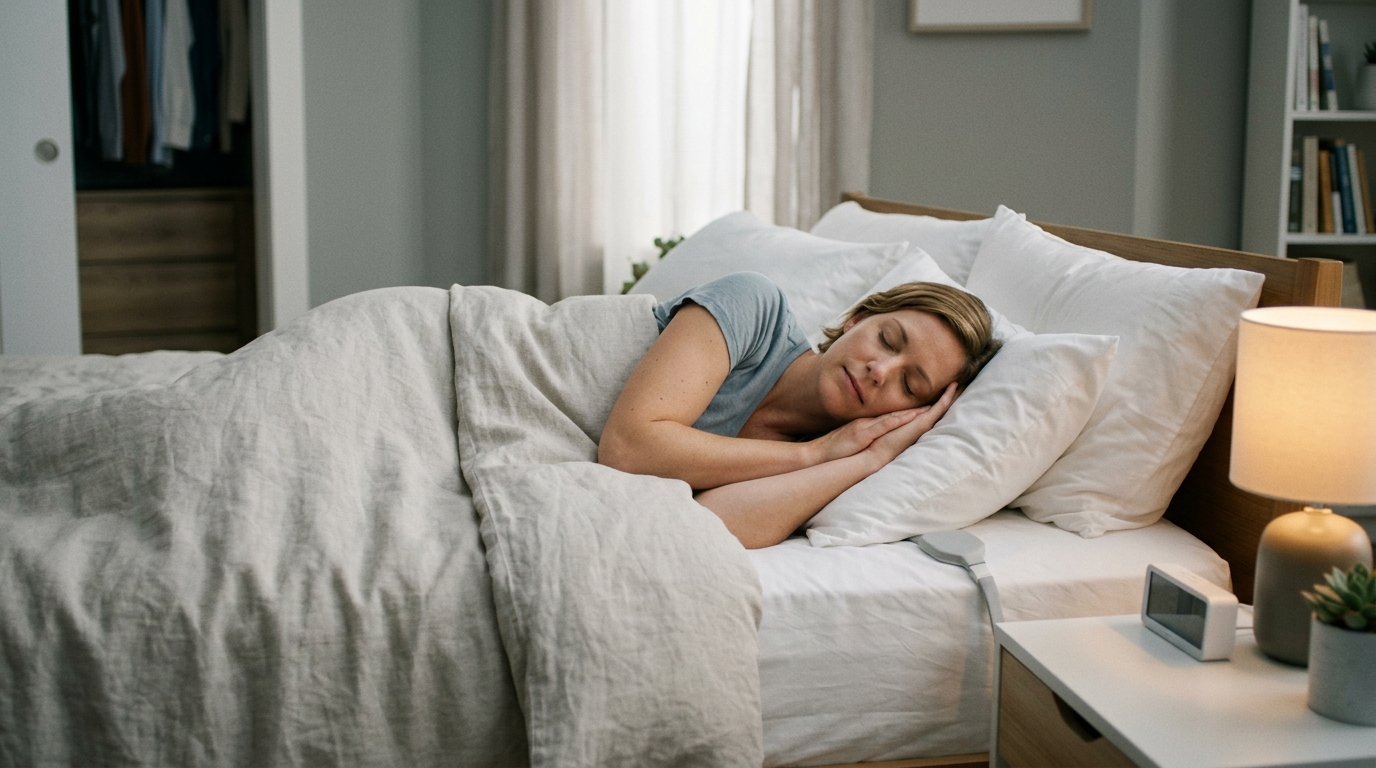
Your partner mentions, half-joking, that you stopped breathing last night. Just for a few seconds, then a loud snort, then you were snoring again like nothing happened. You laugh it off. But then you notice you're dragging through every afternoon, no matter how early you went to bed, and that joke starts feeling less funny.
This is usually how people first encounter signs of sleep apnea — not through a dramatic symptom, but through small, repeated things that eventually add up, often long before anyone even considers a CPAP machine or a formal sleep study.
What Is Sleep Apnea, in Simple Terms?
Sleep apnea is a medical condition where breathing repeatedly stops and starts during sleep, usually because the airway narrows or collapses. Each pause can last several seconds, sometimes longer, and often happens dozens of times a night without the person ever fully waking up to notice.
The most common type, obstructive sleep apnea (OSA), happens when throat muscles relax too much during sleep. There's also central sleep apnea, a less common type related to how the brain signals breathing — but that distinction is something a doctor determines through testing, not something you can figure out from symptoms alone.
Symptoms of Sleep Apnea at Night
Nighttime symptoms are usually the first clues, though the person experiencing them often isn't the one who notices — it's typically a partner or family member who sees it happen.
- Loud, chronic snoring: Especially snoring that's noticeably louder or more irregular than usual.
- Choking or gasping sounds: Sudden interruptions during sleep as the body scrambles for oxygen.
- Observed pauses in breathing: Witnessed pauses in airflow, sometimes followed by a sudden snort or gasp.
- Restless sleep: Frequent tossing and turning without a clear physical reason.
- Dry mouth or sore throat: Waking up thirsty with a parched mouth from heavy mouth-breathing.
- Frequent nighttime urination: Needing to get up multiple times during the night to use the bathroom.
- Night sweats: Perspiring during sleep, unrelated to room temperature or heavy blankets.
If you sleep alone, some of these are harder to catch — which is part of why sleep apnea often goes undiagnosed for years.
Snoring vs Sleep Apnea — How Are They Different?
This is one of the most common points of confusion, and an important one.
Snoring alone is extremely common and, on its own, isn't necessarily a severe medical concern. It happens when air flows past relaxed tissues in the throat, causing vibration.
Sleep apnea involves actual pauses in breathing, not just noise. The airway doesn't just vibrate — it narrows or closes enough to interrupt airflow completely, which causes blood oxygen levels to drop and forces the brain to briefly wake or shift sleep stages to resume breathing.
Daytime Signs People Often Miss
Nighttime symptoms get most of the attention, but daytime signs are just as telling — and often what finally pushes someone to seek medical advice.
- Persistent fatigue: Feeling completely drained, even after what felt like a full 8-hour night's sleep.
- Morning headaches: Dull headaches upon waking, which tend to fade within an hour or two.
- Difficulty concentrating: Brain fog, slow reaction times, or noticeable memory lapses at work.
- Irritability or mood changes: Unexplained moodiness, anxiety, or depression that doesn't have an obvious cause.
- Falling asleep during quiet daytime activities: Drowsing off while reading, watching TV, sitting in meetings, or worse, while driving.
If any of these sound familiar and have been going on for weeks rather than days, it's worth paying closer attention.
Sleep Apnea Warning Signs That Need Prompt Attention
While most signs build up gradually, a few deserve quicker medical action:
- Witnessed breathing pauses lasting longer than 10 seconds repeatedly throughout the night
- Waking up gasping, choking, or with a rapid heart rate
- Daytime sleepiness severe enough to affect driving or workplace safety
- High blood pressure that's difficult to control despite medication
- Existing heart conditions combined with new or worsening sleep symptoms
These combinations are clear reasons to seek medical evaluation promptly rather than waiting to see if things improve on their own.
When to See a Doctor for Sleep Apnea
A good general rule: if snoring is loud and frequent, if someone has witnessed breathing pauses, or if daytime fatigue is affecting your ability to function normally, it's time to talk to a doctor — ideally a pulmonologist or sleep specialist who can refer you for a sleep study (polysomnography).
Don't wait for every symptom on this list to show up before acting. Even two or three recurring signs are enough reason to get evaluated. Left unaddressed, sleep apnea has been associated with increased risks to heart health, hypertension, stroke, and overall wellbeing over time, which is exactly why early evaluation matters more than most people realize.
What Happens After Diagnosis
If a sleep study confirms sleep apnea, treatment is usually tailored to its severity and type:
For many people with straightforward obstructive sleep apnea, a CPAP machine (Continuous Positive Airway Pressure) is the standard gold-standard therapy, helping keep the airway pneumatically open through gentle, steady air pressure. If you are in Pakistan, you can explore convenient CPAP machine rentals in Lahore, Karachi, and Islamabad to begin therapy comfortably.
In more complex cases — such as those involving COPD, hypoventilation, or difficulty exhaling against continuous pressure — a doctor may prescribe a BiPAP machine instead, which provides dual pressure settings for inhalation and exhalation.
Either way, the right equipment and settings depend entirely on your clinical diagnosis, not guesswork. Once you have a doctor's direction, selecting the right machine and mask becomes a clear and informed process.
Frequently Asked Questions (FAQs)
1. Can sleep apnea go away on its own?
Mild cases may improve with lifestyle changes like weight management and sleeping on your side, but sleep apnea generally doesn't resolve without medical intervention. A doctor can advise what's appropriate for your situation.
2. Is loud snoring always a sign of sleep apnea?
No. Many people snore loudly without having sleep apnea. The key difference is whether breathing actually pauses or airflow is obstructed, which usually requires a sleep study to confirm.
3. Can sleep apnea happen without snoring?
Yes, though it's less common. Some people with sleep apnea don't snore noticeably, which is another reason daytime symptoms like chronic fatigue and morning headaches shouldn't be dismissed.
4. Is sleep apnea more common in certain people?
It's often associated with factors like excess weight, neck circumference, age, and airway anatomy, but it can affect individuals of any age and body type. A doctor can assess individual risk factors.
5. What does a sleep study actually involve?
It typically monitors breathing patterns, oxygen levels, heart rate, and sleep stages overnight, either at an overnight sleep lab or via an at-home sleep apnea testing kit (HST) recommended by your physician.
6. Can children have sleep apnea too?
Yes, though symptoms can look different in children, such as enlarged tonsils, bedwetting, or behavioral and attention difficulties alongside snoring. A pediatrician should evaluate any suspected case.
Need CPAP or BiPAP Equipment in Pakistan?
Haider Medical Equipment provides certified CPAP and BiPAP machines from ResMed, Philips, and Yuwell for sale and rent across Karachi, Lahore, Islamabad, Rawalpindi, and Peshawar.