
You finally got used to the idea of sleeping with a machine attached to your face every night. Then the mask starts leaking air into your eyes, or leaves painful red marks across your cheeks by morning, or just feels so tight you can't fall asleep in the first place. At that point, most people don't blame the mask — they blame CPAP therapy itself, and some quietly give up on it altogether.
More often than not, the real problem isn't the therapy. It's that nobody explained how to choose a CPAP mask that actually fits your facial structure, your sleeping position, and the way you breathe overnight.
Why the Mask Matters More Than People Expect
The CPAP machine does the pressurized airflow work, but the mask is what determines whether you can actually tolerate using it night after night. A poorly fitted mask leaks air, disrupts sleep cycles, irritates sensitive skin, and is the single biggest reason people abandon CPAP therapy during the initial weeks. Get the mask right, and the rest of the adjustment period becomes far easier.
There is no single "best" mask for everyone — the right choice depends on how you breathe, how you sleep, and your face shape.
Types of CPAP Masks Explained
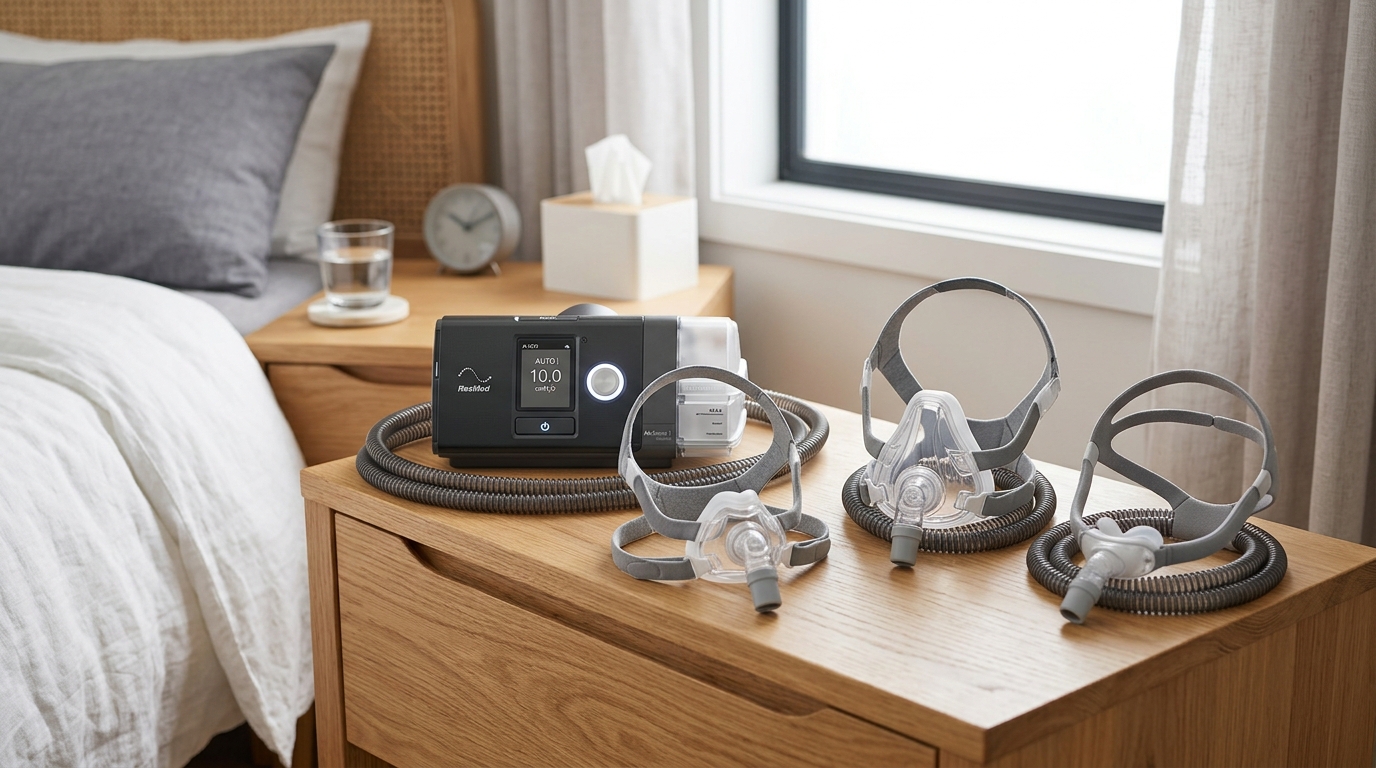
CPAP masks generally fall into three major categories, each tailored to distinct therapeutic needs:
1. Nasal Pillow Mask
Nasal pillows feature small silicone cushions that sit right at the base of the nostrils, rather than covering the whole nose. They offer a minimal-contact footprint and lightweight feel.
Best for: People who feel claustrophobic with bulkier masks, active side sleepers, and those who wear glasses or like an unobstructed view for reading or watching TV before sleep.
2. Nasal Mask
A nasal mask covers the nose entirely, resting comfortably over the nasal bridge and sealing around the nostrils.
Best for: People who naturally breathe through their nose while asleep and need a bit more stability or require higher pressure settings than a nasal pillow can comfortably handle.
3. Full-Face Mask
A full-face mask seals around both the nose and the mouth, providing complete coverage for dual-pathway breathing.
Best for: People who breathe through their mouth at night, have frequent nasal congestion or allergies, or have tried nasal options without achieving adequate therapy pressures.
Nasal Mask vs Full-Face CPAP Mask — Which Should You Pick?
This is usually the biggest fork in the decision, and it largely comes down to one simple question: do you breathe through your nose or your mouth while asleep?
If you wake up with a dry, parched mouth most mornings, that's often a sign you're mouth-breathing overnight — which makes a nasal-only mask less effective, since air pressure escapes through an open mouth instead of keeping your throat airway pneumatically open.
A full-face mask solves that by covering both airways, but it comes with trade-offs: more surface area means more potential leak points, and some users find it feels more confining.
If you're unsure which applies to you, a sleep technician can usually tell from your sleep study data, or you can start with a nasal mask and switch if dry mouth or leaks become persistent issues.
CPAP Mask for Side Sleepers
Side sleeping and CPAP masks don't always get along effortlessly — bulkier masks can get pushed against the pillow, breaking the seal and causing annoying leaks right when you've drifted off. For side sleepers, a few key things help dramatically:
- Nasal pillow masks tend to work best: Since there is minimal exterior surface area to catch against the pillow.
- Low-profile headgear: Reduces bulk around the sides of the head and temples.
- Contoured CPAP pillows: Specially designed with side cutouts for tubing and mask clearance to prevent pressure dislodgement.
- Avoid wide frames: Steer clear of masks with large rigid frames or side-mounted tubing connectors if side sleeping is your primary position.
If you toss and switch positions throughout the night, a slightly more secure nasal mask (rather than minimal pillow-style) may hold its seal better across movement.
Best CPAP Mask for Comfort — What Actually Helps
Comfort isn't just about mask type — proper fit, sizing, and cushion materials play an enormous role:
- Proper sizing matters more than style: A mask that is even slightly too large or small will leak and irritate skin regardless of how advanced the design is.
- Silicone vs Gel cushions: Silicone cushions are standard and lightweight, but if you have sensitive skin or contact dermatitis, consider memory foam or gel alternatives (such as ResMed AirTouch series).
- Strap tension: Adjustable headgear straps should sit snug without digging into the skin. Tightening a mask excessively to stop leaks usually just creates new pressure points and creases the silicone.
- Minimal-contact designs: Nasal pillows or under-the-nose cushions cause fewer pressure marks over time.
- Give it a few nights: Allow any new mask a few nights of adjustment before deciding it doesn't work — initial awareness of wearing equipment is normal and typically fades.
Signs Your Current Mask Isn't the Right Fit
- Frequent air leaks, especially blowing upward into your eyes
- Red marks, bridge sores, or indentations that don't fade shortly after waking
- Needing to overtighten straps just to keep the seal intact
- Waking up repeatedly through the night due to mask shifting or discomfort
- Persistent dry mouth despite using a heated humidifier chamber
Any of these are reasons to revisit your mask choice with your supplier — not reasons to abandon CPAP therapy altogether.
Getting Professional Input Before You Decide
Mask fitting genuinely benefits from professional guidance, especially the first time around. Face geometry, bridge depth, facial hair, and breathing patterns all affect which mask will deliver long-term compliance. Where possible, get fitted through a knowledgeable equipment provider rather than guessing based on online photos alone.
If you're setting up therapy for the first time or replacing worn equipment in Pakistan, explore our complete CPAP machine range, ResMed CPAP options, and compatible masks so your entire setup works seamlessly together from night one.
Frequently Asked Questions (FAQs)
1. How often should a CPAP mask be replaced?
This depends on manufacturer guidelines and maintenance, but silicone cushions typically wear out every 3 to 6 months. Replace cushions or headgear as soon as you notice reduced seal flexibility or visible wear.
2. Can I switch CPAP mask types without changing my pressure settings?
In most cases yes, though modern CPAP devices (like ResMed AirSense) have a setting for mask type (Pillows, Nasal, or Full Face) that optimizes flow calibration. Always consult your equipment provider when switching styles.
3. Why does my CPAP mask leak even though it fits snugly?
Overtightening straps often compresses and distorts the cushion, creating folds where air escapes. Also check for facial oils on the silicone, an aged cushion, or movement during sleep.
4. Is a full-face mask always necessary for mouth breathers?
Not always. Some people succeed using a nasal mask paired with an adjustable chin strap to keep their mouth closed, but a full-face mask is typically the most reliable long-term solution for mouth breathing.
5. How do I know if my CPAP mask is the wrong size?
Persistent leaks around the eye sockets, sore spots on the nose bridge, or straps that must be cinched to their tightest limits usually indicate an incorrect cushion or frame size.
6. Can allergies affect which CPAP mask I should use?
Yes. Nasal congestion from allergies forces mouth breathing, which renders nasal masks uncomfortable. A full-face mask or treating the underlying nasal congestion is recommended.
Need Help Selecting the Right CPAP Mask or Machine?
Haider Medical Equipment carries genuine ResMed, BMC, and Yuwell masks and CPAP devices for sale and rent across Karachi, Lahore, Islamabad, Rawalpindi, and Peshawar.