
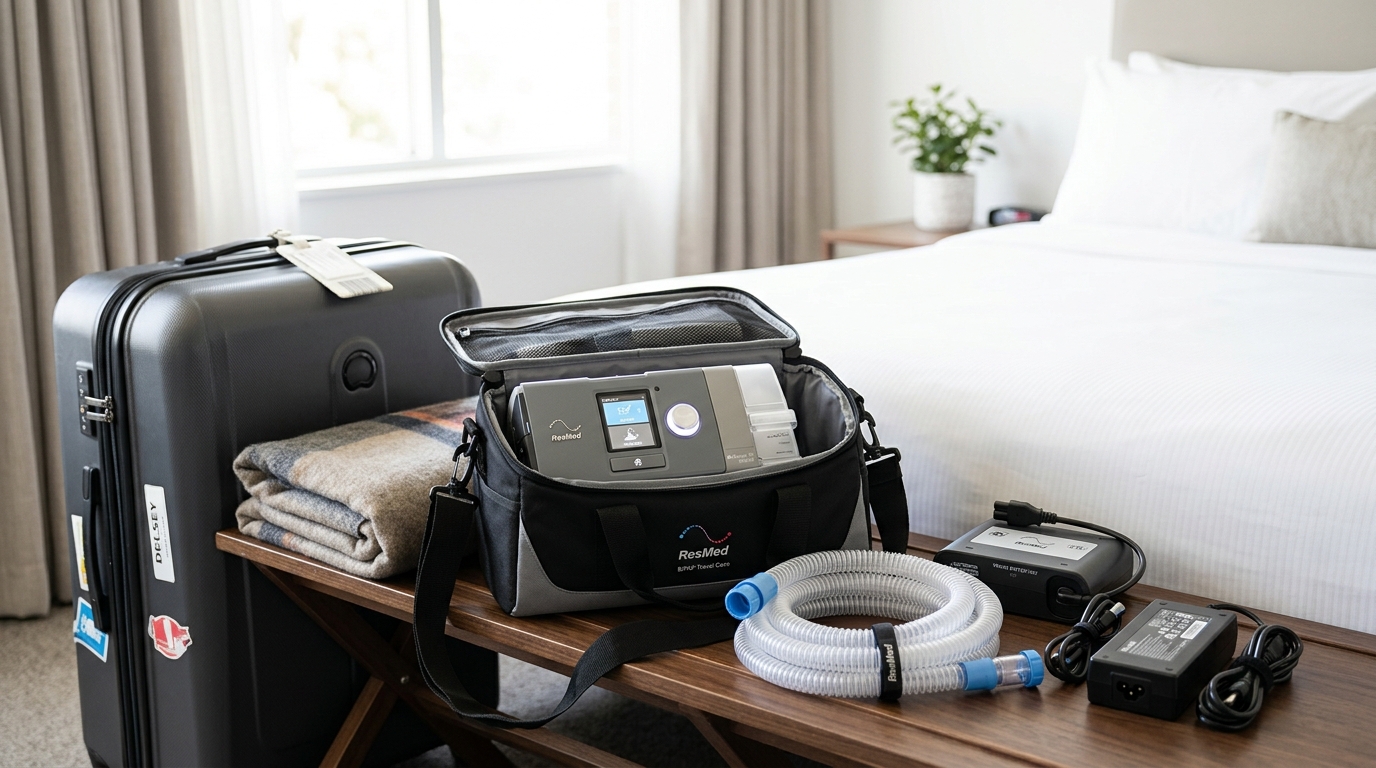
You've finally adjusted to sleeping with your BiPAP machine every night — and now a family wedding out of town, or a business trip, has you panicking about logistics. Can you even take it on a flight? What happens during the load-shedding and power cuts that hit your city every evening? Is it safe to just leave it running while you take a quick nap?
These aren't small worries. For anyone relying on bilevel ventilation daily, BiPAP machine safety isn't just about avoiding physical damage to the equipment — it's about making sure your breathing therapy doesn't get interrupted when you need it most.
Why Safety and Consistency Matter With BiPAP Therapy
BiPAP therapy works because it is used consistently — skipping nights or using a machine that is malfunctioning undermines the whole point of treatment. Unlike non-critical devices you can pause without consequence, interruptions in BiPAP support can cause an immediate return of nocturnal carbon dioxide retention, shortness of breath, and hypoxemia, particularly for patients with COPD, neuromuscular disorders, or complex sleep apnea.
Safety here covers two essential areas: physically protecting the machine and accessories, and ensuring breathing therapy never stops during power outages or travel.
Precautions While Using a BiPAP Machine at Home
A few simple daily habits go a long way toward keeping both the patient and the machine safe:
- Stable surface: Place the machine on a flat, solid bedside table — never on soft blankets or rugs where it can tip over or suck in dust fibers.
- Clear air intake: Keep the rear and side air filter intake vents completely unobstructed by curtains or walls to prevent motor overheating.
- Keep away from open heat: Avoid placement near heaters, fireplaces, or direct sunlight.
- Inspect tubing: Regularly check your hose for pinhole cracks, kinks, or tears that cause undetected pressure loss.
- Hygiene & no sharing: Never share masks or breathing tubes between family members without hospital-grade sterilization.
- Humidifier chamber safety: Never move or transport the machine while water remains in the heated humidifier chamber. Always empty it before shifting the unit.
- Lock prescribed settings: Never adjust your clinician's IPAP/EPAP pressure settings or backup rates without doctor authorization.
If you notice strange motor noises, burning smells, or irregular pressure delivery, discontinue use and contact your equipment technician immediately.
BiPAP Machine Power Backup Options (Load-Shedding Solutions)
In Pakistan, unpredictable power cuts and scheduled load-shedding represent one of the most critical challenges for BiPAP patients. Losing power mid-therapy isn't just inconvenient — it suddenly cuts off pressurized ventilation while the patient is asleep wearing a sealed mask.
Here are the safest power backup setups recommended by medical equipment specialists:
- Dedicated Medical Battery Packs: Lithium-ion battery packs engineered for ResMed (e.g., RPS II) or BMC machines provide 8 to 14 hours of continuous runtime without electricity.
- Pure Sine Wave UPS Systems: If using a home UPS or inverter, ensure it outputs a Pure Sine Wave. Modified square-wave inverters can damage sensitive brushless medical motors and microprocessors.
- Generator Connections: If running on home generators, always connect the BiPAP through a high-grade voltage stabilizer or surge protector to guard against voltage spikes when the generator starts or stops.
Always test your backup solution periodically before an emergency strikes, and verify runtime with heated humidification disabled (which cuts power consumption by up to 60%).
How to Travel With a BiPAP Machine
Traveling with your BiPAP machine is entirely manageable with advance preparation:
Traveling by Air (Domestic & International Flights)
- Medical equipment exemption: Most commercial airlines (including PIA, Airblue, Emirates, and Qatar Airways) classify BiPAP and CPAP devices as assistive medical devices, meaning they do not count toward your standard carry-on cabin baggage allowance.
- Doctor's prescription letter: Keep a copy of your doctor's prescription note and device FAA compliance letter in your bag for security screening.
- Always carry-on: Never place your BiPAP in checked baggage where temperature drops and rough luggage handling can destroy the unit.
Traveling by Road
- Secure the padded travel case firmly on a car seat rather than loose in the trunk under heavy bags.
- Many BiPAP models feature 12V DC adapters that plug directly into vehicle cigarette lighter sockets, allowing rest-stop usage.
General Travel Tips
- Pack an extra mask cushion, headgear clip, and tube adapter in case of accidental damage during transit.
- Always use distilled water for the humidifier at hotels; avoid mineral-heavy tap water that leaves scale buildup.
- Carry international plug adapters (Type C, D, G) if traveling between regions.
When to Involve Your Doctor or Equipment Supplier
Reach out promptly if you experience any of the following:
- A sudden change in airflow sensation or error codes flashing on screen
- Persistent facial skin breakdown or redness from your mask
- Frequent machine power cutouts disrupting nightly sleep
- Any physical casing cracks, frayed power wires, or water infiltration
If you need a reliable travel-ready backup unit, a replacement mask, or a BiPAP machine for home use, explore our full BiPAP machine range available for sale and rent across major cities in Pakistan.
Frequently Asked Questions (FAQs)
1. Can I use my BiPAP machine during a power outage without a backup battery?
No. BiPAP machines cannot store electrical energy on their own. During an outage, a dedicated lithium battery pack or a pure sine wave UPS is essential to prevent sudden therapy stoppage.
2. Is it safe to take a BiPAP machine on a flight?
Yes. Modern devices are FAA-certified for air travel. Always inform the airline at least 48 hours before flying if you plan to use it during an overnight flight, and carry medical documentation.
3. How often should BiPAP tubing and masks be replaced?
Mask cushions should typically be replaced every 3–6 months, tubing every 6 months, and air filters monthly to prevent allergen buildup and air leaks.
4. Can humidity or heat damage a BiPAP machine?
Yes. Excessive humidity or water sloshing back from the humidifier into the blower chamber can ruin internal sensors. Always empty the chamber before moving the machine.
5. What should I do if my BiPAP machine stops working while traveling?
Contact Haider Medical Equipment's 24/7 hotline. We have local offices and express replacement delivery across Karachi, Lahore, Islamabad, Rawalpindi, and Peshawar.
6. Is it dangerous to skip BiPAP therapy for a few nights while traveling?
Skipping nights is dangerous because arterial carbon dioxide can rise quickly, triggering morning headaches, severe fatigue, and dangerous oxygen desaturation. Never travel without your therapy unit.
Need BiPAP Rental, Purchase, or Emergency Backup in Pakistan?
Haider Medical Equipment provides medical-grade BiPAP machines (ResMed Lumis, AirCurve, BMC G3) with battery backup options and 24/7 technical support nationwide.